At times, I do use the clicker and have taught with it. This is how I started. Initially, in 2003, my human students learned how to use the clicker to teach their dogs and the dogs learned how to respond to it. In my FAQs, there is a brief reason for why I don’t use the clicker. But, the underlying reason I stopped teaching clicker training classes was and is far more personal.
I should preface this: The clicker can be a wonderful tool when people know how to use it.
When I started out as a newbie trainer, using the clicker was ‘synonymous’ with positive dog training. Only positive trainers used clickers, so by way of reason, only clicker trainers were positive. This concept intentionally or unintentionally was spoken and unspoken by many in dog training circles.
Then there was “Jake.”
My awakening occurred when I taught one of my dog training classes in 2003. Teaching was phenomenal. I had a small room and we spent time outdoors. I taught with the clicker. The classes were fun and the dogs were great. Many human students from these classes have still stayed in touch with me. The dogs were happy and they had off-leash play time in a small room. Everyone got along and had fun. And, I had a big box of clickers.
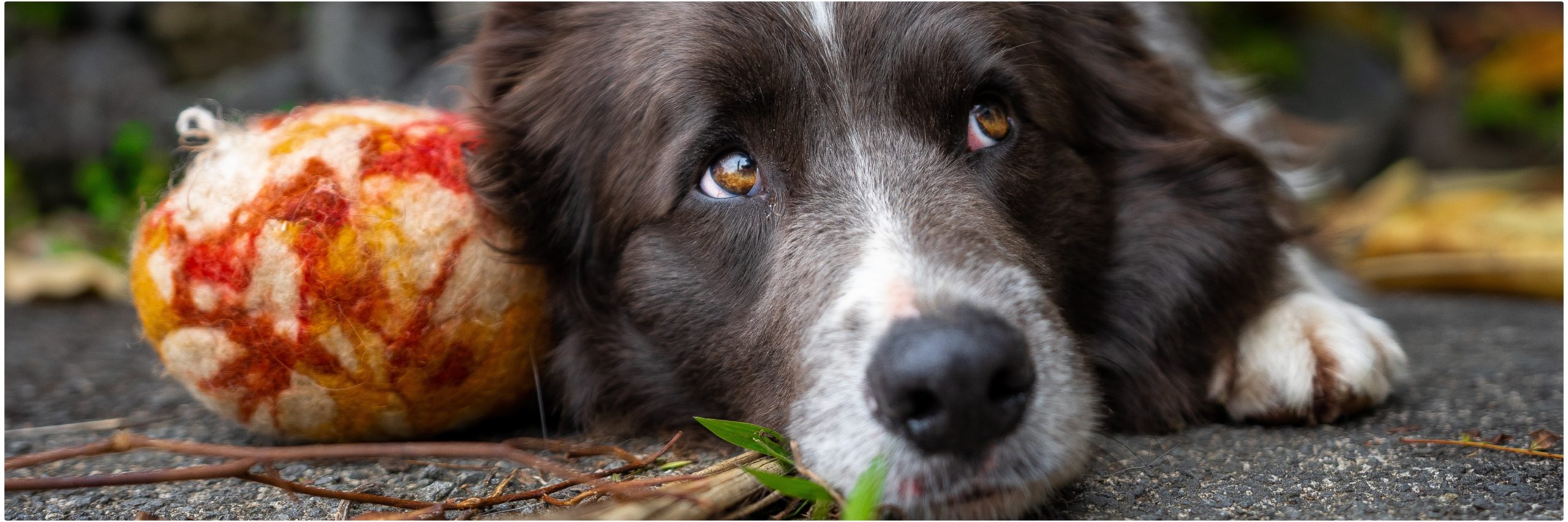
Then, there was “Jake.” He was a foster dog and his “foster mom” took him to my dog training classes, free of charge. It was an arrangement I worked out with the rescue organization. Jake was beautiful —a gentle large shepherd, Aussie mix with medium-long light and chocolate brown fur. He was extremely intelligent, a quick learner, and the star of the class. He was a sponge. He thrived and blossomed with positive reinforcement.
One day, an elderly gentleman came to watch Jake. The next two following weeks, Jake did not appear in my classes. After Jake did not come to the second class, I inquired about why he wasn’t attending.
Jake had been adopted. To my horror, the rescue organization had sent Jake to his adoptive home with the dog training clicker. Instead of feeling happy, I had an uneasy feeling. I was a bit surprised and concerned that the rescue had sent Jake to an adopter with the clicker since the adopter never met with me to learn how to use it, nor brought Jake to any of my training classes.
Long story shortened, Jake ran away from the people who adopted him. As it turned out, his adopters ended up using the clicker as a punishment, paired with the command “No.” Jake was, subsequently, passed between family members and punished with the clicker. Other than he was found and sent back to the original adopters, I never heard what happened to him. I try not to think about it as I begin to feel physically ill and upset when I do.
Because of Jake, from that moment on, I stopped teaching dog training classes with the clicker or “clicker training” as my standard operating procedure. I realized that the clicker wasn’t synonymous with positive dog training. There was no ‘magic’ in it—as some are led or seem to believe. It’s just a tool. In the wrong hands, and in inept hands, it can be stressful and confuse dogs. Since the efficacy of clicker training is on the proficiency of the trainer, a dog owner who is unskilled or lacks knowledge shouldn’t be using it. Since my experience with Jake, I’ve seen the clicker used, far too many times, incorrectly.
The “clicker makes it quicker” is a popular mantra. Yes, it does and it can. But only for those who know how to use it. There is a learning curve to using the clicker. It can be cumbersome for people to learn and handle, and it can be easily substituted with a voice or verbal marker.
I still use the clicker, at times, but only for my clients who already know how to teach their dogs and understand How Dogs Learn. It can be good for teaching tricks and shaping behaviors. I recently taught a long-term client with a newly adopted coonhound how to use the clicker to enhance her timing when giving verbal feedback to her dog. She felt it really helped her.
However, clicker training is not synonymous with positive dog training. In the wrong hands, it can be damaging. I love Jake, and although it was so many years ago, I still regularly think of him. It was Jake who changed my training methodology and influenced the way I help people resolve canine behavioral problems.
To learn more about dog behavior and positive dog training techniques, read Training Your Dog the Humane Way or The Right Way the First Time.
Photo: © Tom Morales
© 2019 Alana Stevenson. All Rights Reserved.