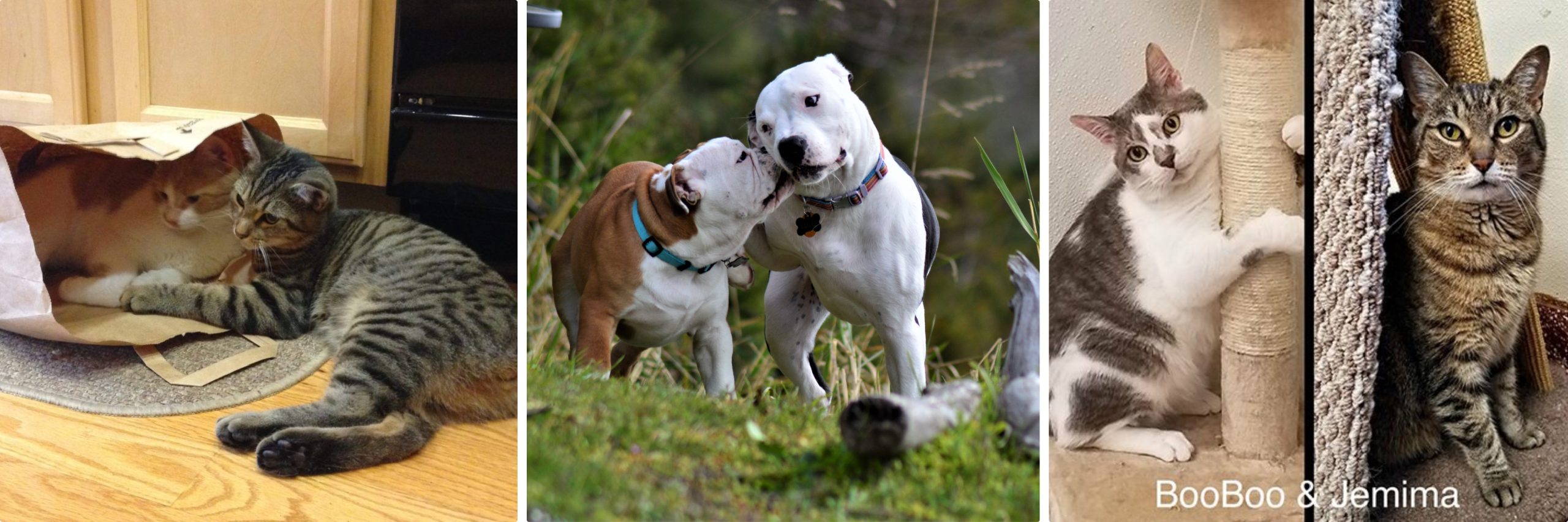
When planning to adopt only one dog, cat, or another companion animal, don’t separate a bonded pair—even if one is especially cute or appealing. Look for a singleton.
Shelters and rescues routinely separate bonded animals because they are quicker to be adopted, but this can lead to emotional and behavioral fallout—especially for an animal who is shy, fearful, or under-socialized.
Socialization isn’t just exposure. It’s positive exposure at the animal’s pace, within their comfort zone. Many animals are only confident when together. Separating them can be traumatizing.
Benefits of Adopting Bonded Animals
- Built-in companionship
- Less loneliness or isolation when you’re away
- Reduced separation anxiety
- More social play and mental stimulation
- Less clinginess or attention-seeking
- Fewer behavioral issues, especially related to fear and anxiety
Problems When Bonded Animals Are Separated
- Shy animals lose their emotional support
- Slower socialization and longer adjustment periods
- Higher levels of anxiety
- More likely to suffer from behavior problems
- Higher potential for conflict with new animals
When considering animals for adoption, ask if they originally arrived with a companion. A close companion or sibling could still be at the shelter or with a foster. This information is not disclosed unless requested. Often, adoption staff or volunteers have to go through earlier intake records for more background on the animal’s history.
For more on emotional bonding and social relationships in cats, read The Good Cat Parent’s Guide to Feline Behavior Modification.
Photos: L, Kitty Bear & Zozo © Beth Dayton; C., © Bryan Hanson; R, Upper Valley Humane Society (UVHS)
© 2017 Alana Stevenson. All Rights Reserved.