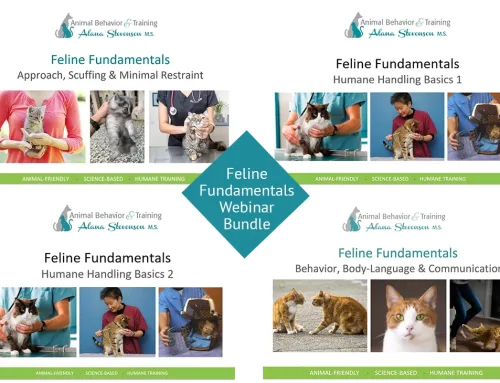

Learn gentle cat handling techniques, feline body language, the use of towels, and humane approach with Alana’s Cat Behavior & Handling Tutorials.
Alana Stevenson, cat behaviorist, and Dr. Sally Foote, DVM discuss the importance of humane feline handling and low-stress veterinary care.
Interview Highlights
Alana: What do you think stands out the most about the Feline Fundamentals webinars?
Dr. Foote: I really appreciate the photos and step-by-step guidance. The webinars show how these techniques apply in real-life settings—whether in a shelter, a foster home, or during a vet visit. The practical examples make it easier for people to understand how to implement them.
Alana: A lot of it comes down to changing how we approach and handle cats—especially fearful ones. Not scruffing, approaching from behind, and using a towel to gently cover the cat’s head can make a huge difference. Many cats in clinical settings just want to hide. If we pull them out of carriers or handle them roughly, they panic. But if we let them stay on a soft surface and avoid frontal handling, their behavioral response is completely different.
Dr. Foote: Yes, that shift in approach really matters. In large-animal care, we’re trained to approach from the side—it’s less threatening. We should apply the same mindfulness with cats. A 10-pound cat might not injure you like a cow could, but her emotional welfare is just as important. It’s not hard to change our handling methods, and doing so makes a big difference.
Alana: Absolutely. The cat’s mental and emotional well-being is just as critical as her physical health. If we ignore that, we create unnecessary stress—and that stress can lead to illness or behavior issues. Often, those behavior issues are why cats end up surrendered to shelters.
Dr. Foote: Exactly. We don’t talk enough about how stress affects biology—blood sugar, oxygen levels, and brain chemistry. But it’s all connected. And behavior problems are the leading reason animals are relinquished. For dogs, it’s often jumping, barking, or anxiety. For cats, it’s housesoiling—and that’s often due to poor environmental enrichment. Basic things like shelves and cat-friendly spaces can make a huge difference.
Alana: That’s a big part of the message in the webinars. Humane handling and environmental design aren’t just medical—they’re behavioral. And anyone involved in care—techs, fosters, adopters—can learn these skills. It creates a ripple effect that benefits the animals long-term.
Dr. Foote: I love that the webinars bridge the gap between veterinary professionals and caregivers. You’re not just presenting theory—you’re showing how to take action. From towel wraps to approaching from the side, these are things people can actually use tomorrow.
Alana: I also hope we can help shift the perception that being gentle is weak. Compassion is essential—not just for the animal’s experience, but for effective care. Being skilled and being kind should go hand in hand.
Dr. Foote: It’s the art and science of behavior—and of medicine. Blending evidence-based techniques with thoughtful, individualized care leads to better outcomes for everyone.
© 2019 Alana Stevenson. All Rights Reserved.