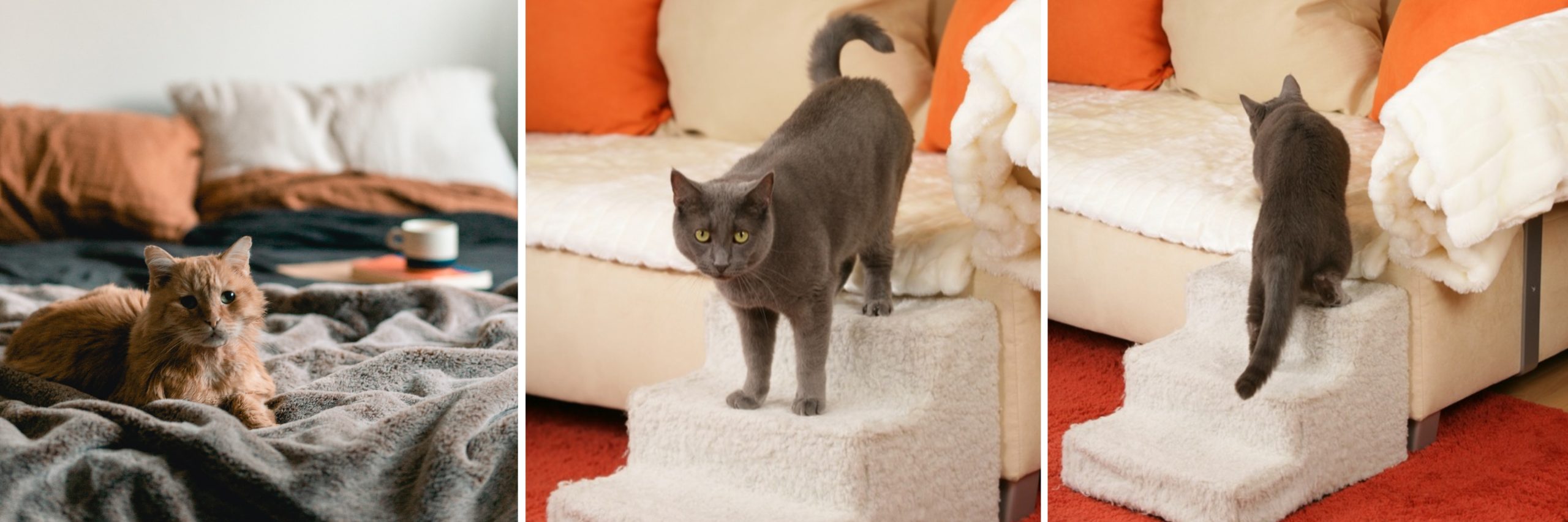
Many cats develop arthritis, especially after age twelve. Animals can’t tell us when they feel pain, so we have to watch subtleties in their behavior and body language. Older cats often hesitate before jumping down from surfaces. Although cats can climb, jump, and leap onto higher surfaces, most prefer walking up and down using intermediate steps rather than leaping. This is especially true for getting down from higher surfaces. Many cat trees and condos are too narrow or steep for older cats to climb or rest on.
It’s important to keep their bodies properly aligned when carrying cats. Handling older cats can be painful for them, so be gentle, supportive, and steady when carrying.
Speak to your vet about pain medication, especially if your cat is older, seems uncomfortable, or hesitates getting down from surfaces. Here are some additional tips for arthritic cats.
Alana Stevenson’s Tips
- Provide heated beds and soft surfaces
- Add intermediate platforms or use wide, sturdy furniture to make climbing easier.
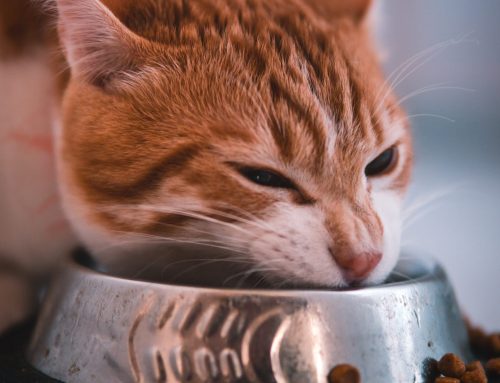
- Provide plenty of water. Cats will drink more if water bowls are separated from their food.
- Place large water bowls where your cat sleeps and socializes.
- Provide enrichment—place bird feeders outside windows and play in ways that entice older cats. Use black string and make it slither around a box or corner, or make wand and pole toys quiver beneath a blanket or sweatshirt. End play with treats.
- Groom your cat frequently. Use a soft-bristled brush or moist paper towels to stroke your cat. Older cats often need more help with grooming and cleaning.
- Keep up with nail clipping. Older cats scratch less often, so their nails grow longer and may curl into their paw pads without regular trimming.
- Speak to your vet about pain medication.
- Put nightlights in hallways, along stairs, and near food, water bowls, and litter pans.
- Provide wide, shallow litter pans so cats can enter, exit, and turn around easily.
Dr. Coryn Vickrey’s Tips
- HEATED BEDS are readily available in pet stores, online, etc.
- Make sure all resources—litter box, water, food, and preferred perches—are easily accessible. An arthritic cat will not enjoy walking down an entire flight of stairs to use the litter box. Some arthritic cats can’t climb over high-sided litter boxes. Make things easier for them by having everything they need on one level and/or by providing a step (as simple as the right size overturned cardboard box) or move furniture to create a staircase to the windowsill.
- When picking up an older cat, support the chest and pelvis to keep the spine in a nice line. Don’t lift the cat by the middle or limbs.
- Keep nails trimmed. Scratching behaviors often decrease due to pain, so nails grow longer. These can get stuck, and painful joints make it harder for them to get free.
- Talk to your vet about whether regular pain medication is appropriate.
- When handling, try hard not to pull legs fully straight or flex the lumbosacral areas. Keep their body more in line.
- If frequent handling is needed (e.g., in shelters or clinics), be generous with pre-treatment pain medications or sedation.
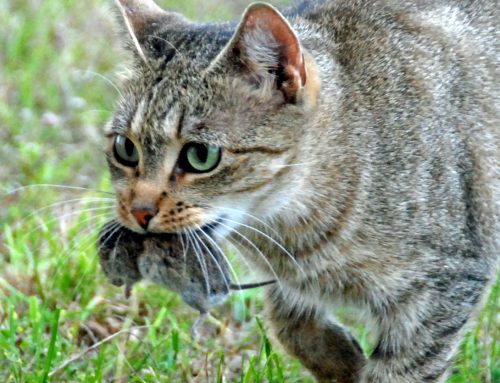
Photos: L, © Jose Hernandez Uribe; R, © Lens on Focus
Watch Dr. Vickrey and Alana Stevenson demonstrate how to handle arthritic cats.
To learn more about senior or geriatric cats and humane handling skills, read The Good Cat Parent’s Guide to Feline Behavior Modification.
© 2018 Alana Stevenson. All Rights Reserved.